
Research explained
What are ultra-processed foods, and are they bad for you?
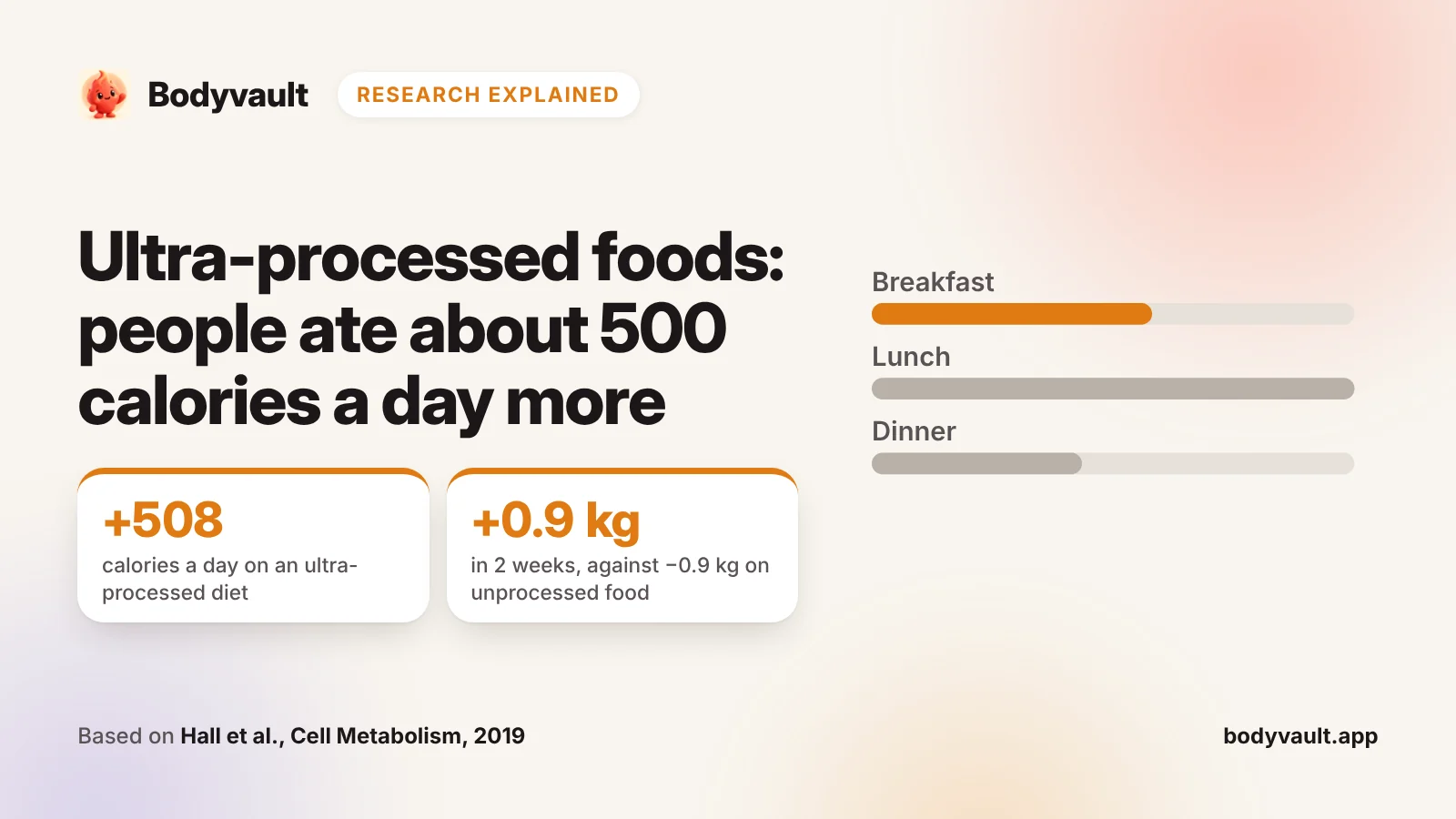
What are ultra-processed foods? They are foods made in factories from food extracts and additives you wouldn’t use at home, such as biscuits, instant noodles and soft drinks. In a careful trial, people ate about 500 calories a day more on an ultra-processed diet and gained about 1 kg in 2 weeks.
The short answer
+508kcal
More calories eaten each day on an ultra-processed diet than on an unprocessed one, in 20 adults
+0.9kg
Weight gained in 2 weeks on that diet. On unprocessed food, people lost 0.9 kg
2×
About twice the weight loss on a lightly processed diet, when both diets met the UK’s healthy diet guide
32of 45
Results that linked more ultra-processed food with worse health, in a review of studies of about 10 million people
Strength of evidenceModerate
Two small trials found that people ate more, or lost less weight, on ultra-processed diets. Many large studies link these foods with worse health, but they can’t prove cause, and most were rated low quality.
Key findingYou don’t need to fear every packaged food. But in trials, people ate more and lost less weight when most of their food was ultra-processed. Making most meals from whole or lightly processed foods is a sensible choice.
What are ultra-processed foods?
Almost all food is processed in some way. Dal is dried and split, atta is ground wheat, and milk is pasteurised. A system called NOVA, used in Brazil’s national dietary guidelines, sorts this out. It puts foods into four groups by how much, and why, they are processed.
| Group | What it means | Examples |
|---|---|---|
| 1. Unprocessed or minimally processed | Whole foods that are only dried, ground, frozen, pasteurised or packed | Rice, atta, dal, vegetables, fruit, milk, eggs, plain nuts |
| 2. Cooking ingredients | Taken from foods and used to cook them | Oil, ghee, sugar, salt |
| 3. Processed foods | Group 1 foods with salt, sugar or oil added | Bread made only from flour, water, salt and yeast; cheese; canned vegetables |
| 4. Ultra-processed foods | Made in factories, mostly from food extracts, with additives you wouldn’t cook with | Soft drinks, packaged snacks, biscuits, instant noodles, many breakfast cereals, ice cream, sausages, nuggets |
These foods start with whole foods split into parts, such as sugars, oils, starches and proteins. Factories then put these parts back together, often with flavours, colours and other additives. The result is cheap, keeps for a long time and is ready to eat.
How to spot one on the label
The simplest test is the ingredient list. A food is ultra-processed if it has even one ingredient you wouldn’t find in a kitchen. Look for:
- flavours, flavour enhancers (such as MSG), colours, sweeteners, thickeners or emulsifiers (which keep oil and water mixed);
- factory-made sugars, such as maltodextrin, dextrose, invert sugar or high-fructose corn syrup;
- hydrogenated or interesterified oil (oil changed by a chemical process);
- protein isolates, such as whey protein or soya protein isolate.
So what is the difference between processed and ultra-processed food? Bread made only from flour, water, salt and yeast is processed. The same bread with emulsifiers or colours is ultra-processed. Plain corn flakes are minimally processed. With added sugar they are processed, and with flavours or colours they are ultra-processed.
Ultra-processed foods in India
India’s 2024 dietary guidelines, from the National Institute of Nutrition (ICMR-NIN), sort foods into three groups. Group C is ultra-processed. It includes packaged bread, breakfast cereals, cakes, chips, biscuits, jams, sauces, ice cream, protein powders, peanut butter, soy chunks and frozen foods with additives. Cool drinks, energy drinks and packaged fruit juices are in it too. The guidelines also name instant noodles.
Home-cooked dal, roti and sabzi are not ultra-processed, and nor is most freshly made street food. Packaged namkeen and chips count as ultra-processed when the label lists additives such as flavour enhancers or colours. The guidelines add a warning: home-made food can still be unhealthy if it has a lot of fat, sugar or salt.
What happened when people ate an ultra-processed diet?
It was the first trial of its kind. The meals on offer had about the same sugar, fat, fibre and salt. People rated both diets as about equally pleasant, and felt about as hungry and full on each. Yet on the ultra-processed diet, they ate 508 more calories a day.
They also ate faster: 17 more calories a minute. The researchers think softer food that is easier to chew may be part of the reason. But the study wasn’t designed to find the cause.
Does it still matter if the food is “healthy”?
A 2025 trial in England asked a sharper question. Both diets followed the UK’s healthy diet guide. One used mostly whole or lightly processed food. The other used “healthier” ultra-processed products, such as breakfast cereals, ready meals and plant-based alternatives.
Fifty-five adults with overweight or obesity took part, and 91% were women. Each ate both diets for 8 weeks, in random order, with all food delivered to their homes. They lost weight on both, but about twice as much on the lightly processed diet.
Not every result favoured the lightly processed diet. LDL (“bad”) cholesterol fell more on the other diet, and people rated the lightly processed food as less tasty. But they had better control over cravings on it.
Are ultra-processed foods bad for you?
A 2024 review of reviews pooled 45 results from studies of about 10 million people. These studies compared people who ate the most of these foods with those who ate the least. This kind of study shows a link. It can’t prove that one thing causes the other.
In 32 of the 45 results, eating more ultra-processed food went with worse health. The strongest links were with death from heart and blood vessel disease, type 2 diabetes, anxiety and common mental health problems.
Risk in people who ate the most ultra-processed food
- Death from heart disease+66%
- Obesity+55%
- Common mental health problems+53%
- Death from heart and blood vessel disease+50%
- Anxiety+48%
- Type 2 diabetes+40%
- Death from any cause+21%
These links need care. People who eat a lot of these foods also tend to eat fewer fruits, vegetables and pulses, so the rest of their diet may explain part of the links. Of the 45 results, 41 were rated low or very low quality (our count). And these foods aren’t all alike: in one of the reviews, wholegrain bread, breakfast cereals and yoghurt went with a lower risk of type 2 diabetes.
India’s guidelines link them with overweight, heart disease, stroke and diabetes, and advise eating less of them. They add that putting extra vitamins or minerals into these foods doesn’t make them wholesome.
Claims and evidence
ClaimAll processed food is bad for you.
EvidenceAlmost all food is processed in some way, such as atta, dal, curd and frozen peas. The concern is ultra-processed food, the most processed of NOVA’s four groups.
ClaimUltra-processed food is only a problem because of its sugar, fat and salt.
EvidenceIn the 2019 trial, both diets offered the same sugar, fat, fibre and salt. People still ate about 500 calories a day more on the ultra-processed diet.
ClaimA “healthy” label or added vitamins makes a packaged food fine.
EvidenceIndia’s guidelines say adding nutrients doesn’t make such food wholesome. In a 2025 trial, “healthier” packaged products led to about half the weight loss.
ClaimBig studies prove that ultra-processed food causes heart disease and depression.
EvidenceThey show strong, repeated links. But they can’t prove cause, and most of the evidence was rated low or very low quality.
What this means for you
What this means for you
- Build most meals from whole or lightly processed foods: rice, roti made from atta, dal, vegetables, fruit, eggs, curd, and plain nuts and seeds.
- Read the ingredient list. Flavour enhancers, colours, emulsifiers, sweeteners, maltodextrin, hydrogenated oil or protein isolates mark a food as ultra-processed.
- You don’t need to be perfect. Start by swapping one daily packaged snack, such as biscuits, namkeen or instant noodles, for fruit, roasted chana, peanuts or home-made poha.
- Watch salt too. India’s guidelines name chips, biscuits, namkeen, papad and pickles as foods high in salt.
- If you have diabetes, heart or kidney disease, or follow a special diet, plan big changes with your doctor or a dietitian.
What the research can’t tell you yet
- Small, short trials. The two key trials had 20 people for 2 weeks per diet, and 50 people for 8 weeks, mostly women.
- Links, not proof. The big studies were observational and used food questionnaires. Most were rated low or very low quality.
- Broad groups. NOVA puts very different foods in one group. Wholegrain bread and soft drinks are both ultra-processed, but they may not affect health the same way.
- Where the trials were done. Both trials took place in the US and England, where diets differ from those in India.
How Bodyvault uses this research
Bodyvault doesn’t label foods as ultra-processed. When you scan a packaged food’s barcode, it looks up the product’s nutrients on Open Food Facts, and only the barcode is sent. If your logged sodium averages well above your daily limit over a week, the Coach points to namkeen, papad, pickles, instant noodles and restaurant food as common sources. To check the calories in home-cooked Indian food, try the Indian food calorie counter.
Share or cite this explainer
Bodyvault (2026). What are ultra-processed foods, and are they bad for you? https://bodyvault.app/blog/ultra-processed-foods
The charts on this page may be reused with a link back to it. The underlying data belong to the studies cited below.
Questions
What is considered ultra-processed food?
A food made in a factory mostly from food extracts, with additives you wouldn’t use at home. If the ingredient list has even one item such as a flavour enhancer, colour, emulsifier, sweetener or protein isolate, it counts as ultra-processed.
What foods are ultra-processed?
Common examples are soft drinks, packaged snacks, biscuits, instant noodles, many breakfast cereals, ice cream, packaged bread, sausages and nuggets. India’s guidelines add cool drinks, packaged fruit juices and protein powders.
Is peanut butter ultra-processed?
It depends on the label. Peanut butter made only from peanuts, perhaps with salt, is not ultra-processed under the NOVA rule. If it lists hydrogenated oil, emulsifiers, sweeteners or flavours, it is. India’s 2024 guidelines list shop-bought peanut butter as ultra-processed.
Is protein powder ultra-processed?
Usually, yes. The NOVA system names whey protein and soya protein isolate as ingredients that make a food ultra-processed. India’s guidelines also list protein powders as ultra-processed, and note they may contain added sugar, sweeteners and artificial flavours.
Why are ultra-processed foods bad for you?
In a careful trial, people ate about 500 calories a day more on them, ate faster and gained weight. Large studies link them with heart disease, type 2 diabetes and depression, but those studies can’t prove cause.
Sources
- Hall KD et al. (2019). Ultra-processed diets cause excess calorie intake and weight gain: an inpatient randomized controlled trial of ad libitum food intake. Cell Metab 30(1):67–77.e3.
- Monteiro CA et al. (2019). Ultra-processed foods: what they are and how to identify them. Public Health Nutr 22(5):936–941.
- Lane MM et al. (2024). Ultra-processed food exposure and adverse health outcomes: umbrella review of epidemiological meta-analyses. BMJ 384:e077310.
- Dicken SJ et al. (2025). Ultraprocessed or minimally processed diets following healthy dietary guidelines on weight and cardiometabolic health: a randomized, crossover trial. Nat Med 31(10):3297–3308.
- ICMR-NIN (2024). Dietary Guidelines for Indians, revised edition.
General information about fitness and nutrition, not medical advice. If you have a health condition, are pregnant or take medication, talk to your doctor before changing your diet or training.